
Don Juan is an English unfinished satirical epic poem written by Lord Byron between 1819 and 1824 that portrays the Spanish folk legend of Don Juan, not as a womaniser as historically portrayed, but as a victim easily seduced by women. Don Juan is a poem written in ottava rima and presented in 16 cantos in which Lord Byron derived the character of Don Juan from traditional Spanish folk legends; however, the story was very much his own. Upon publication in 1819, cantos I and II were widely criticised as immoral because Byron had so freely ridiculed the social subjects and public figures of his time. At his death in 1824, Lord Byron had completed 16 of 17 cantos, whilst canto XVII remained unfinished.
Adaptations (1)
Don Juan was adapted into a 1926 film.
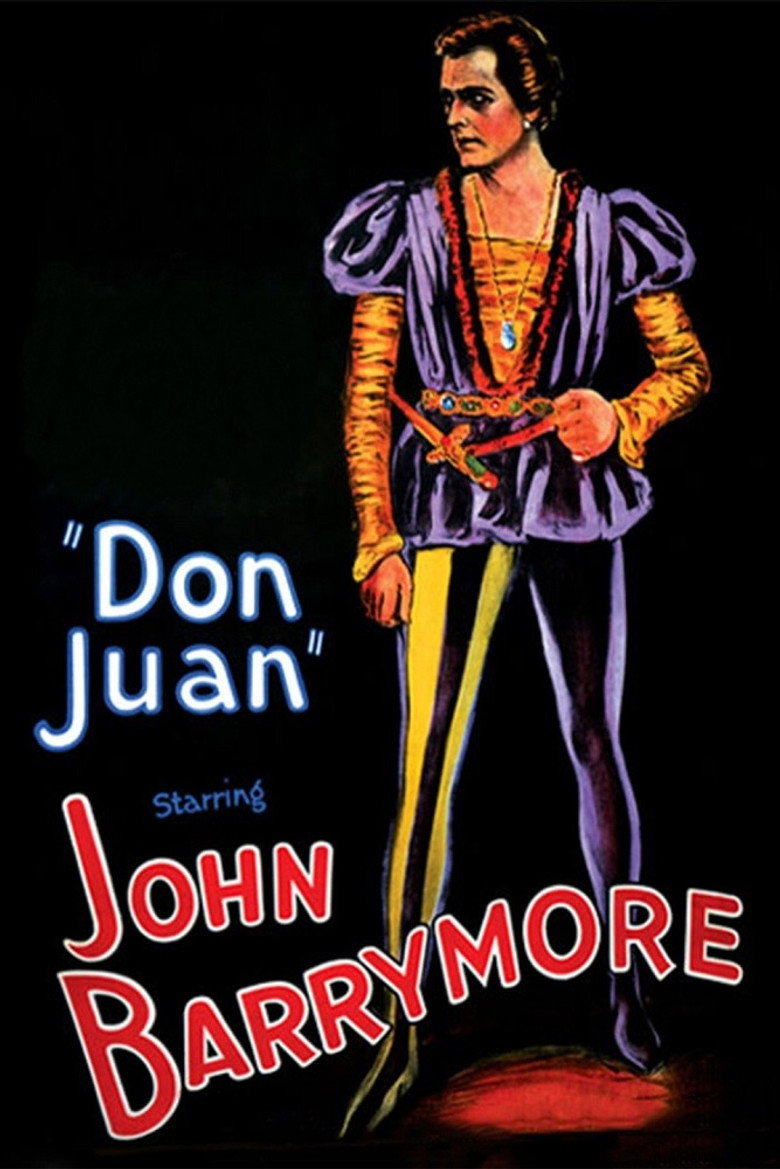 Don Juan1926 · film · 110 min · dir. Alan Crosland · IMDb ↗IMDb7.0100%
If there was one thing that Don Juan de Marana learned from his father Don Jose, it was that women gave you three things - life, disillusionment and death. In his father's case it was his wife, Donna Isobel, and Donna Elvira who supplied the latter. Don Juan settled in Rome after attending the University of Pisa. Rome was run by the tyrannical Borgia family consisting of Caesar, Lucrezia and the Count Donati. Juan has his way with and was pursued by many women, but it is the one that he could not have that haunts him. It will be for her that he suffers the wrath of Borgia for ignoring Lucrezia and then killing Count Donati in a duel. For Adriana, they will both be condemned to death in the prison on the river Tigre.
