
Jin Ping Mei
by Lanling Xiaoxiao Shengliterary work· published 1610
Shop for this title via the links below.
Jin Ping Mei (Chinese: 金瓶梅)—translated into English as The Plum in the Golden Vase or The Golden Lotus—is a Chinese novel of manners composed in vernacular Chinese during the latter half of the 16th century during the late Ming dynasty (1368–1644). Consisting of 100 chapters, it was published under the pseudonym Lanling Xiaoxiao Sheng (蘭陵笑笑生), "The Scoffing Scholar of Lanling," but the only clue to the actual identity is that the author hailed from Lanling County in present-day Shandong. The novel circulated in manuscript as early as 1596, and may have undergone revision up to its first printed edition in 1610. The most widely read recension, edited and published with commentaries by Zhang Zhupo in 1695, deleted or rewrote passages to help understand the author's intentions.
Adaptations (1)
Jin Ping Mei was adapted into a 1968 film.
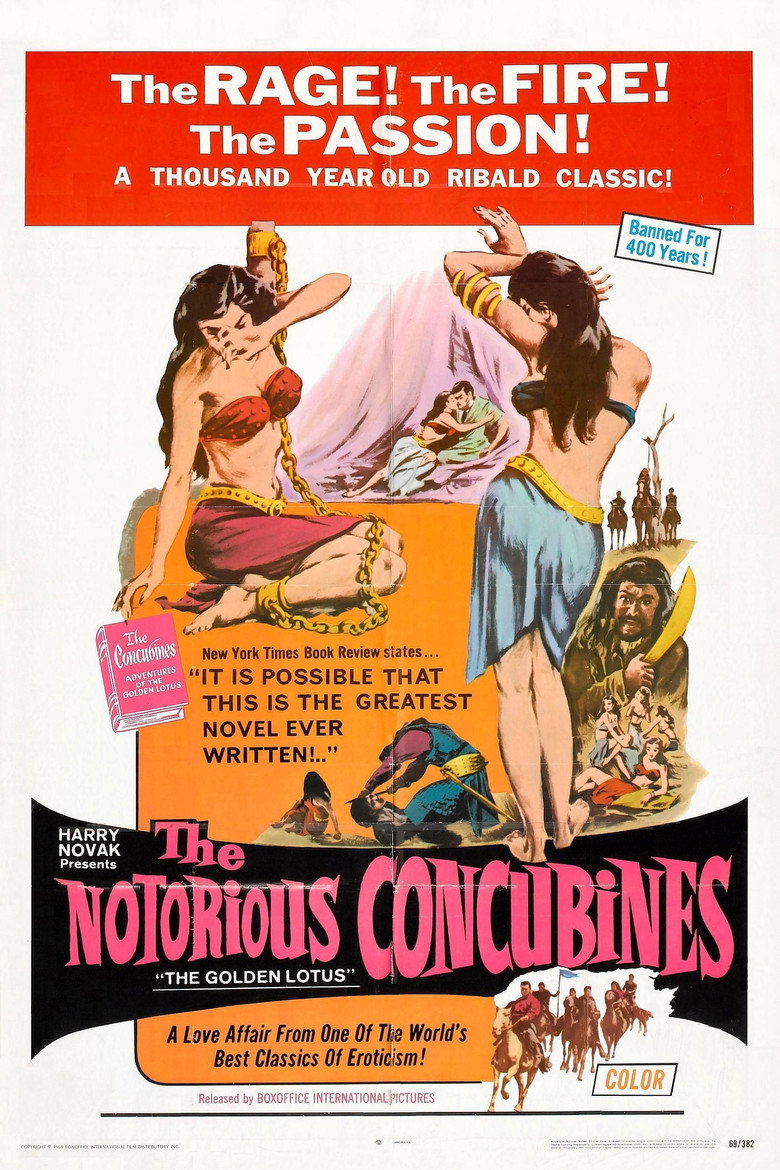 The Notorious Concubines1968 · film · 90 min · dir. Kôji Wakamatsu · IMDb ↗IMDb4.4
Based on the Chinese classic "Jin Ping Mei". Original Japanese cut directed by Koji Wakamatsu and produced by Shochiku. Set in Song-dynasty China, Wu Song rises to fame and becomes a guard captain. He is captivated by his brother’s wife, Pan Jinlian, whose beauty also ensnares the wealthy libertine Ximen Qing. To possess her, Ximen Qing has Wu Song’s brother murdered. When the corrupt authorities refuse justice, Wu Song is imprisoned, escapes with the help of the Liangshan bandits, and joins their ranks. Ximen Qing descends further into decadence, but Wu Song eventually returns, leading an attack on the town.
