
The Trojan Women (Ancient Greek: Τρῳάδες, romanized: Trōiades, lit. "The Female Trojans") is a tragedy by the Greek playwright Euripides, produced in 415 BCE. Also translated as The Women of Troy, or as its transliterated Greek title Troades, The Trojan Women presents commentary on the costs of war through the lens of women and children. The four central women of the play are the same that appear in the final book of the Iliad, lamenting over the corpse of Hector after the Trojan War. Hecuba, another tragedy by Euripides, similarly deals with the experiences of women left behind by war and was more popular in antiquity. The tragedy has inspired many modern adaptation across film, literature, and the stage.
Adaptations (1)
The Trojan Women was adapted into a 1971 film.
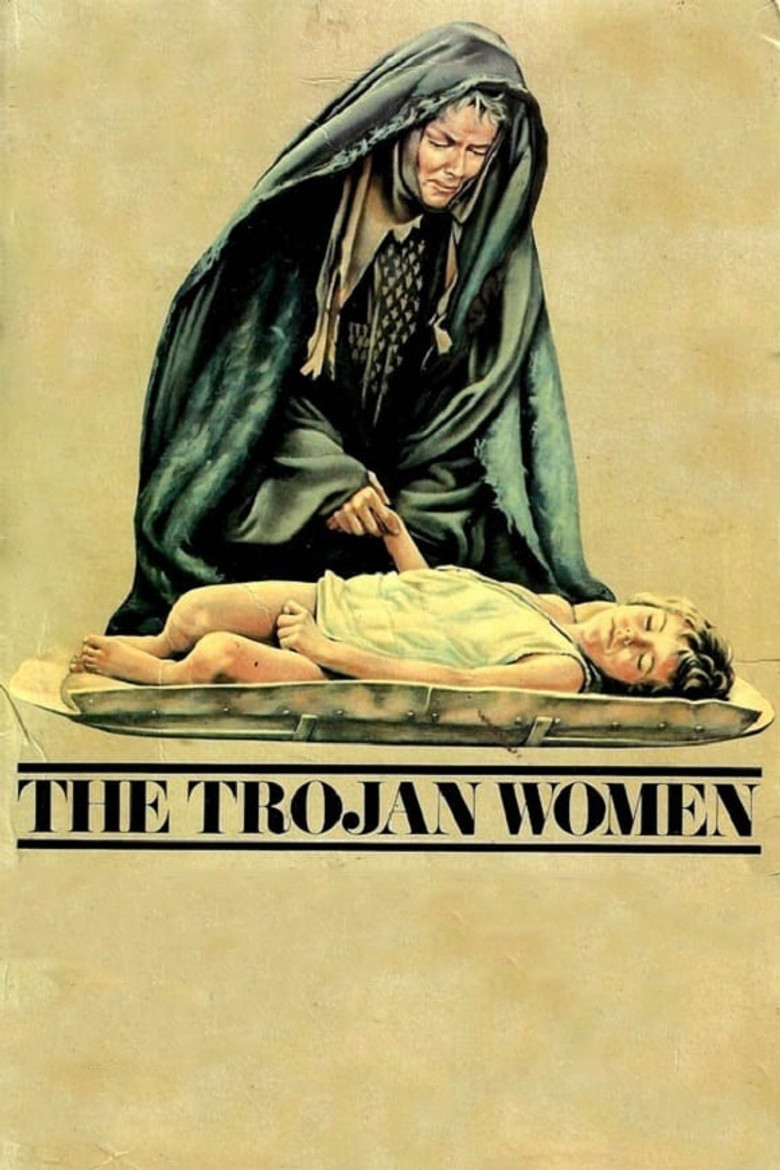 The Trojan Women1971 · film · 105 min · dir. Michael Cacoyannis · IMDb ↗IMDb6.9
In the aftermath of the Trojan Wars, Queen Hecuba takes stock of the defeated kingdom. Her son has been killed, and his widow, Andromache, is left to raise their son, Astyanax, alone. Hecuba's daughter, Cassandra, fears being enslaved by her Greek masters, while Helen of Troy risks being executed. Astyanax also becomes the focus of the Greeks' attention as the last male heir of the Trojan royal family.
